

August 13, 2025
|

Many clay shooting enthusiasts face a frustrating challenge: they want to improve their skills but can’t always get to a sporting clays course. This guide reveals proven methods for sharpening clay shooting techniques using simple equipment and exercises that anyone can do in their backyard or living room. Get ready to discover game-changing practice secrets.
Dry-Fire Practice for Technique
Once shooters understand the basics of clay shooting, they need to develop proper shooting techniques through consistent practice. Dry firing provides an excellent way to refine fundamental skills without visiting a shooting range.
- Set up a safe practice area in the home where dry firing can occur without any ammunition present. Check the firearm multiple times to ensure it contains no live rounds before beginning any practice session.
- Practice proper gun mounting by bringing the shotgun smoothly to the shoulder while maintaining correct cheek placement on the stock. Focus on achieving the same mount position every single time to build muscle memory.
- Work on trigger control by squeezing the trigger straight back with steady finger pressure. Avoid jerking or slapping the trigger, which can throw off accuracy during actual clay target shooting.
- Develop consistent stance and foot positioning by practicing the same shooting position repeatedly. Keep feet shoulder-width apart with the body weight slightly forward for better balance and control.
- Practice swing techniques by following imaginary clay targets across the room or yard. Move the gun barrel smoothly while maintaining proper sight alignment throughout the entire swing motion.
- Use a small mirror or have someone observe to check for proper eye alignment with the gun’s rib. Correct eye positioning helps ensure accurate target acquisition during real shooting situations.
- Rehearse the complete shooting sequence from gun ready position through target acquisition, swing, and trigger pull. This coordination practice helps shooters perform these movements automatically during competition.
Simulating Target Tracking
You don’t always need to visit a clay shooting range to sharpen your tracking skills. With a few creative drills, you can build muscle memory, improve coordination, and prepare for live targets.
- Track Airplanes – Follow planes crossing the sky with an unloaded shotgun. This drill trains your eyes and hands to work together while keeping your swing smooth.
- Follow Birds in Flight – Use the mount-and-swing technique on flying birds. This helps you practice lead calculation and judge speed and distance.
- Laser Pointer Drill – In a dark room, move a laser dot across a wall to mimic target movement. Focus on keeping your swing steady.
- Tennis Ball Toss – Have a partner toss tennis balls for you to track. This improves reaction time and target acquisition.
- Insect Tracking – Follow small, fast-moving insects like dragonflies. Their erratic movement builds your precision and control.
- Vehicle Tracking – From a safe distance, follow moving cars or trucks. This is great for practicing sustained lead on targets with consistent speed.
- Training Apps – Use smartphone apps with moving target simulations. These work well for indoor practice when weather isn’t ideal.
- Pendulum Drill – Track a swinging object to perfect swing speed and timing. Keep your movement smooth and controlled.
Strength and Conditioning Exercises
Clay shooting works more than just your aim—it’s a full-body activity that requires strength, stability, and endurance. These exercises target the key muscles and movements you’ll use on the range.
- Shoulder Blade Squeezes – Pull your shoulder blades together, hold for 10 seconds, and release. Builds upper back strength for better posture and less fatigue.
- Wall Push-Ups – Stand an arm’s length from a wall, push yourself away 15–20 times. Strengthens chest and shoulders without equipment.
- Planks – Hold for 30–60 seconds, keeping your body straight from head to heels. Improves core stability for better balance when tracking targets.
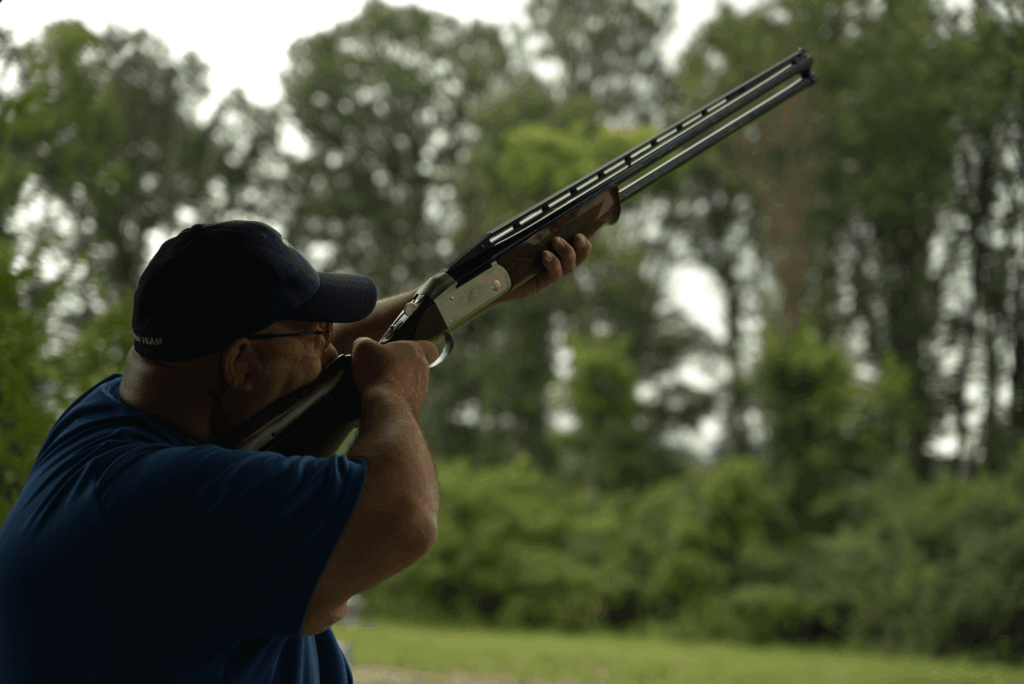
- Resistance Band Mounts – Pull a band across your chest like you’re mounting your shotgun, hold for 3 seconds, then release. Builds shooting muscles and mounting consistency.
- Single-Leg Stands – Stand on one foot for 30 seconds, then switch. Boosts balance and coordination for steady tracking.
- Wrist Curls – Use 2–3 lb weights, curling in both directions for 15–20 reps. Improves grip and forearm strength for smoother gun control.
- Squats – Perform 15–20 slow, controlled reps. Strengthens legs for stable shooting stances.
- Neck Stretches – Tilt your head side to side, holding each for 15 seconds. Keeps your neck flexible and reduces mounting strain.
Mental Preparation and Visualization
You don’t need live rounds or a formal range to sharpen your clay shooting mindset. Mental training can be done anywhere, and it’s one of the most powerful ways to improve performance before you ever step onto a shooting field.
Start with controlled breathing exercises to steady your body under pressure. Deep, slow breaths help lower your heart rate and train your mind to stay calm when it’s time to pull the trigger.
Visualization takes this a step further. Picture a clay target sailing across the sky, track it with your eyes, feel the shotgun mount against your shoulder, and follow through on the shot—all in your mind. The more vividly you imagine each step, the more effectively you train the neural pathways responsible for coordination and timing.
Even five to ten minutes of focused visualization each day can make a noticeable difference. Add details like the swing of the barrel, the texture of the stock, and the sound of breaking clays to make your mental rehearsal as realistic as possible.
By practicing these mental skills off the range, you’ll arrive at your next clay shooting session with sharper focus, steadier hands, and greater confidence.
Conclusion
Improving your clay shooting skills doesn’t always require live fire or a trip to the range. With the right dry-fire drills, tracking exercises, strength training, and mental preparation, you can keep your technique sharp from home, in the backyard, or even while traveling. Consistent off-range practice builds the muscle memory, coordination, and confidence you need to perform under pressure.
When you do get the chance to shoot live rounds, you’ll notice the difference immediately—tighter swings, smoother mounts, and better target breaks. And if you’re looking for a place to put all that practice to the test, Wing Pointe offers the perfect setting. Their challenging clay layouts, professional shotgun instruction, and welcoming atmosphere make it an ideal spot to see how your hard work pays off.
Sharpen your skills anywhere, and when you step onto the field at Wing Pointe, you’ll be ready to shoot your best round yet.
Recent Posts

The Reopening of Keystone Clays as Wing Pointe Sporting Clays
August 27, 2025
|
Pennsylvania shooting enthusiasts have been searching for their favorite sporting clays course since Keystone Clays closed its doors. Wing Pointe…

How to Prepare for Your First Time Shooting Clays
August 13, 2025
|
Many beginners feel nervous about their first clay pigeon shooting experience because they don’t know what to expect. This guide…

Safety Rules Every Clay Shooter Should Know
August 13, 2025
|
This guide covers essential safety protocols, range rules, and protective equipment that keep clay shooters safe during every shooting event.…